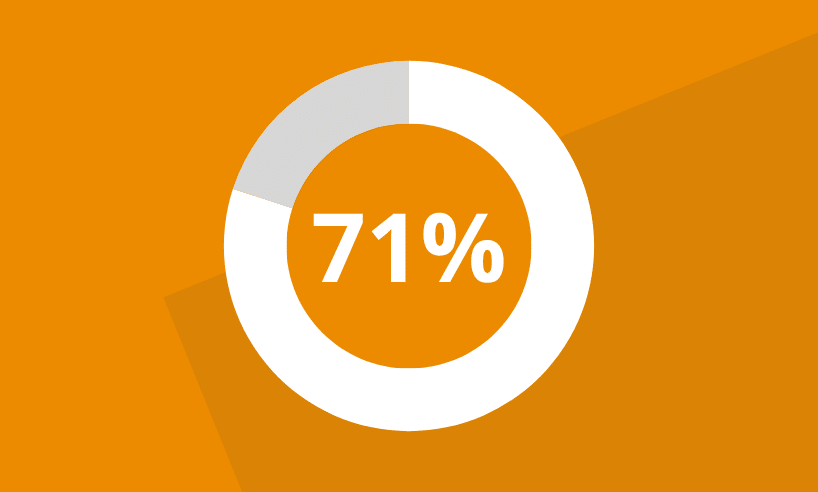
- 71% of SME employers plan to appeal dismissal decisions amid concerns over increasing exposure to claims under unfair dismissal rules, according to a new study from IRIS Software Group.
- With claims able to be made after six months – and the compensation cap set to be scrapped entirely – employers face increased exposure, with the average case cost already reaching £22,200.
London, UK, April 1, 2026: UK SMEs are preparing to appeal dismissal decisions when new hires are unsuccessful, as changes to unfair dismissal rules increase a business’ potential exposure to claims and financial risk, new research from IRIS Software Group reveals.
A study of 500 SME HR leaders* found that 71% are likely to make a termination decision before six months when concerns arise – effectively shortening a new hire’s chances of success. These findings raise an important question for employers: instead of speeding up layoff decisions, what are the greater odds of getting things done in the first six months from the start?
Under the Employment Rights Act 2025, starting 1st In January 2027, the qualifying period for unfair dismissal claims will fall from two years to six months. At the same time, compensation limits will be eliminated entirely, increasing the potential financial exposure for employers**.
Importantly, some dismissal-related claims – including discrimination and whistleblowing – no longer have a qualifying period and no limits on compensation, meaning employees can make claims from their first day of work.
A common practice, it is now under scrutiny
Early layoffs are already a reality for many SMEs. On average, HR leaders say they have laid off two employees between six and 24 months of employment over the past three years.
The most common reasons cited were performance or ability issues (50%), followed by poor behavior (43%), problems related to attendance or illness (33%), failure to meet targets (31%), and termination of employment (17%).
A separate IRIS poll of 500 SME employees* found that almost one in five (19%) had been sacked or made redundant between six months and two years into employment. Of those, 73% felt the decision was unfair or unjustified – but only 20% filed a claim, and 17% said they were unable to do so because they had not yet reached two years of service.
Risks are rising – and employees are ready to act
Of employees surveyed by IRIS, 63% said they were more likely to oppose dismissal under the new six-month rule – pointing to a potential increase in claims as access to rights improves.
The IRIS poll revealed significant financial exposure. Two in five (42%) SMEs say they have defended an unfair dismissal claim in the last three years, at an average cost of £22,200 in settlements, compensation, legal costs and lost time. Almost a quarter (23%) said the case would cost between £25,000 and £49,999, with 8% facing costs of up to £99,999.
Stephanie Coward, Managing Director, HCM at IRIS Software Group, said: “What is surprising is that many of these situations already exist – employees feel that decisions are unfair, but lack the ability to challenge those decisions.
“These changes don’t necessarily create new risks, but they make existing issues much more visible and actionable for employees. The first six months of employment are critical — not just in terms of risk, and as an opportunity to get the working relationship right from the start.”
Reshaping employer behavior
While these reforms are designed to improve fairness, they also change employer behavior. Nearly half (47%) of HR leaders say these changes will improve fairness but increase business risk, while 30% believe they will improve fairness without major disruption.
More than half (51%) of HR leaders say these changes will make companies more risk-averse in hiring – and many of them plan to take action earlier when concerns arise and implement more stringent candidate screening. Three-quarters (76%) say they will be more wary of candidates who have limited references or patchy employment histories, and the same proportion plan to implement a more thorough candidate screening process.
At the same time, employers are seeking to strengthen the way probationary periods are managed. More than a third (36%) say these changes will drive improved management standards, with a clear focus on better documentation, earlier performance checks and more structured processes in the first six months.
When documenting probationary performance and termination decisions, 38% of SMBs still rely on email trails, 32% on paper files, and 29% on spreadsheets — rather than dedicated HR software. A third (34%) of SMBs say they plan to invest in dedicated performance management tools such as HR software, and another 39% already have a system or are planning an investment.
Stephanie Coward added: “There is a clear tension in this data. Employers are aware of the intent behind these changes – to improve fairness – but many plan to respond by speeding up firing decisions and being more careful in selecting workers.
“The risk is that the trial period is more about risk management early on. The organizations that will take a step forward in this regard will be those that treat the first six months as a structured, evidence-based program, not just an afterthought.
“This is where having the right systems in place comes in. Relying on informal conversations or fragmented notes is no longer enough – employers need a clear and consistent view of performance, decisions and supporting evidence from day one.
“Organizations that do this right will not only manage risk, they will also treat the first six months as a real opportunity to set people up for success. This means being intentional from day one: clear expectations, a structured check-in process, and the right systems to provide the support and evidence managers need to make good decisions.”
For further information visit:
END
* This research was conducted by Censuswide, on behalf of IRIS Software Group, with a sample of:
- 500 HR leaders in SMEs. Data was collected between 13.03.2026-19.03.2026.
- 500 employees in SMEs. Data was collected between 13.03.2026 – 17.03.2026.
SMEs are defined as employees with a number of employees under 250 people. Censuswide is a member of the Market Research Society (MRS) and the British Polling Council (BPC), and a signatory to the Global Data Quality Pledge. It adheres to the MRS Code of Ethics and ESOMAR principles
** Gov.uk – Fact Sheet: Unfair Dismissal
END
About IRIS Software Group
IRIS Software Group is a global provider of mission-critical software and one of the UK’s largest privately held software companies. IRIS provides software solutions and services for finance, HR and payroll teams, educational organizations, and accounting companies that take the pain out of processes and allow professionals to focus on the work they love. By simplifying, automating and providing insight into everyday mission critical tasks for organizations of all shapes and sizes, IRIS ensures customers can look forward to them with certainty and confidence.
IRIS is the largest third party online reporter working within the UK Government. Ninety-three of the UK’s top 100 accountancy firms use IRIS software. One in six of the UK workforce is paid through IRIS’ payroll offering, and globally, six million employees receive their payslips through IRIS software every month. More than 850,000 employees in the UK are managed by IRIS HR solutions. More than 12,000 schools and colleges in England use IRIS, with four million parents and carers using the IRIS app to connect with their children’s schools; 300 million messages are sent between schools and parents every year, and more than £15 million of transactional payments are processed every month. IRIS is certified as a Great Place to Work® and recognized as one of The Times’ Top 50 Companies for Gender Equality in 2023. IRIS is also recognized as one of the Best Workplaces for Well-Being, one of the Best Workplaces in Technology, and one of the Best Workplaces for Women.
To see how IRIS helps organizations do the right thing every time, visit www.iris.co.uk or follow the IRIS Software Group on LinkedIn, Twitter and Instagram.
Media contact:
Jennifer Peters | Berita@irisglobal.com
PakarPBN
A Private Blog Network (PBN) is a collection of websites that are controlled by a single individual or organization and used primarily to build backlinks to a “money site” in order to influence its ranking in search engines such as Google. The core idea behind a PBN is based on the importance of backlinks in Google’s ranking algorithm. Since Google views backlinks as signals of authority and trust, some website owners attempt to artificially create these signals through a controlled network of sites.
In a typical PBN setup, the owner acquires expired or aged domains that already have existing authority, backlinks, and history. These domains are rebuilt with new content and hosted separately, often using different IP addresses, hosting providers, themes, and ownership details to make them appear unrelated. Within the content published on these sites, links are strategically placed that point to the main website the owner wants to rank higher. By doing this, the owner attempts to pass link equity (also known as “link juice”) from the PBN sites to the target website.
The purpose of a PBN is to give the impression that the target website is naturally earning links from multiple independent sources. If done effectively, this can temporarily improve keyword rankings, increase organic visibility, and drive more traffic from search results.